Commercial snow removal for lots, plazas and buildings in London, Ontario
Plazas, offices and apartment or condo lots need drive lanes, parking rows, walks and entrances open all winter. London Snow Removal takes one request for the whole property, replies by email or phone and arranges the plowing, salting and walkway clearing with a local snow clearing operator.
Properties a commercial request can cover
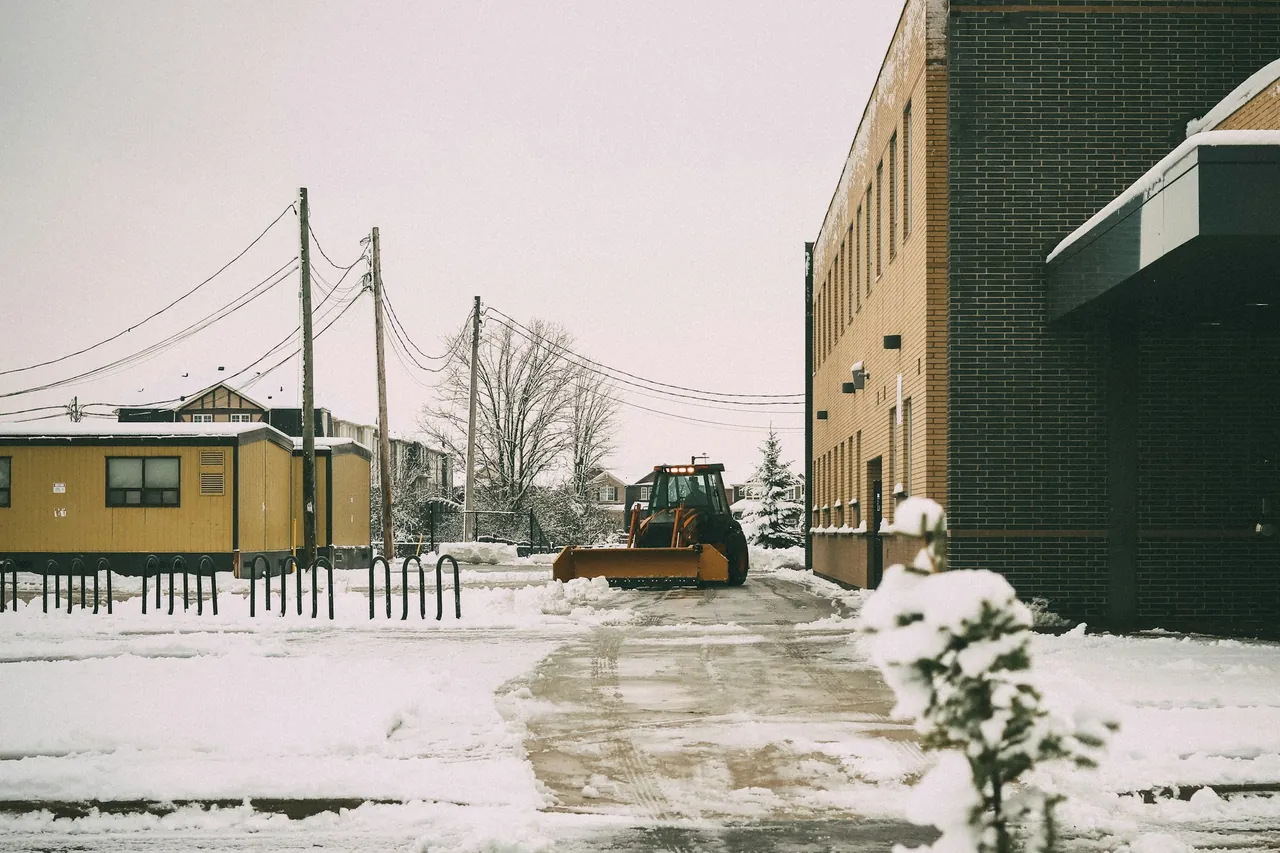
A commercial request can cover any property where customers, tenants or staff park and walk: retail plazas and storefronts, office buildings, and apartment and condo buildings, with their lots, walks, steps and entrances. On the form, choose Business or lot and the Commercial lot service.
Plowing, salting and hauling snow away
Plowing. Plow trucks, loaders or skid steers clear drive lanes and parking rows once snow reaches the agreed trigger depth. Walks, steps and entrances are done by shovel or snowblower.
Salting. Salt, sand or another de-icer goes down after clearing, so ask which product is used where. The page on sidewalk clearing and salting sets out the trade-offs.
Hauling. When piles eat into parking or block the view at exits, the snow can be trucked away. Ask whether hauling is included and how it is charged.
A lot can be cleared under a seasonal agreement or one visit at a time. The guide to seasonal snow removal contracts covers what to settle before signing.
The downtown sidewalk rule: cleared by 10:00 a.m.
If you own land along one of the downtown street portions listed in Schedule C of London's Streets By-law, you must remove snow and ice from the sidewalk along your lot lines before 10:00 a.m. on any day that is not a holiday as defined in the Retail Business Holidays Act.
After 10:00 a.m., the City Engineer can clear what is left without notice at the owner's expense, and the cost can be recovered by action or added to the tax roll. If no other land in the street allowance is free, the cleared snow may go on the part of the sidewalk nearest the street.
The duty sits with the landowner, so if a tenant or property manager arranges the clearing, put the 10:00 a.m. deadline in the snow agreement.
Streets in Schedule C, the Central Business District
| Street | Portion covered |
|---|---|
| Carling Street | Richmond to Talbot |
| Clarence Street | York to Kent |
| Colborne Street | York to Dundas |
| Covent Market Place | Talbot to King |
| Dufferin Avenue | Wellington to Ridout Street North |
| Dundas Street | Rectory to Ridout Street North |
| Fullarton Street | Ridout Street North to Richmond |
| Kent Street | Clarence to Richmond |
| King Street | Colborne to Ridout Street North |
| Queens Avenue | Waterloo to Ridout Street North |
| Richmond Street | York to Oxford |
| Ridout Street North | York to Dufferin |
| Talbot Street | Dufferin to York |
| Waterloo Street | York to Queens |
| Wellington Street | York to Dufferin |
| York Street | Colborne to Ridout Street North |
Icicles and snow on buildings and signs
If your building, structure or sign could drop icicles, ice or snow onto the street, the Streets By-law says the owner must remove them by 10:00 a.m. on any day that is not a holiday. The City's penalty by-law lists $150 for not doing so.
Check roof edges, canopies, awnings and signs after a thaw and a freeze, and add any that need clearing to your request.
Where plowed snow can and cannot be piled
Plowed snow from a commercial lot has to stay off the street, the sidewalk and the boulevard: pile it on the property or have it hauled away. London's Streets By-law bars depositing snow on a street, depositing snow or ice on a sidewalk or roadway, and moving snow or ice from private land to a boulevard, sidewalk or roadway.
Those rules also cover causing snow to be moved or deposited there, so agree on pile spots with the operator before the first snowfall. The owner or occupant must remove misplaced snow at once, and the City Engineer may have it cleared at the owner's expense.
- $300 for depositing snow on a street (Streets By-law section 2.4)
- $150 for depositing snow or ice on a sidewalk or roadway (section 8.2(a))
- $150 for moving snow or ice to a boulevard, sidewalk or roadway (section 8.3)
As listed in By-law A-54, consolidated June 23, 2026. Amounts can change by amendment.
Keep piles away from entrances, drive lanes, accessible parking and the view at exits, and clear of catch basins, ditches, watercourses and wells: the Upper Thames River Conservation Authority says snow piled there can carry salt, sand and debris into water systems as it melts. The guide to City of London snow rules covers the same by-laws for homes.
Salt use near drains and waterways
Use as little salt as does the job. The Upper Thames River Conservation Authority says chloride from road salt does not break down over time and can gradually build up in the environment, making drinking water harder and more expensive to treat and harming aquatic life.
Its advice: shovel before salting, sweep up and reuse leftover salt, use sand or grit for traction, avoid salt near catch basins, ditches and private wells, and keep salt covered and dry. When you ask for salting, name the places salt should not go.
What to put in a commercial request
A useful first message covers:
- The address or nearest intersection
- What needs clearing, and what comes first: lanes, parking rows, walks, ramps, entrances or loading areas
- Whether the property is on a Schedule C street downtown
- Where snow can be piled, or whether it needs hauling away
- When the lot must be clear, and any gates or locked areas
- A seasonal agreement or one visit, and when it should start
Send the request with what you know so far. It is free and does not commit anyone to anything.
Questions about commercial snow removal
Who has to clear the sidewalk in front of a downtown business?
The owner of the land does, on the downtown street portions listed in Schedule C of London's Streets By-law. The sidewalk along the lot lines must be cleared before 10:00 a.m. on any day that is not a holiday, or the City Engineer can clear it at the owner's expense.
What should a commercial snow removal agreement cover?
It should say what will be cleared, when and for what price: the lanes, walks and entrances, the trigger depth, salting, where snow is piled or hauled, any visit limit, the season dates and, downtown, who meets the 10:00 a.m. sidewalk deadline.
Where can a lot's plowed snow be piled?
On the property, away from entrances, drive lanes and drains. London's Streets By-law bars moving snow or ice from private land to a boulevard, sidewalk or roadway, and the Upper Thames River Conservation Authority says snow piled near catch basins can carry salt, sand and debris into water systems as it melts.
Can a business cut back on salt without losing traction?
It can, mostly by clearing snow before salting and using sand or grit where traction is the goal. The Upper Thames River Conservation Authority also advises sweeping up and reusing leftover salt, and says one mug of salt is often enough for a standard driveway or sidewalk.
Request a quote for a commercial property
Tell us about the lot, the walks and entrances, and where snow can go. Sending a request is free and does not commit anyone to anything.
- We read every request and reply by email or phone.
- The work is arranged with a local snow clearing operator.
- Nothing is booked until you agree to what will be cleared, when and for what price.